
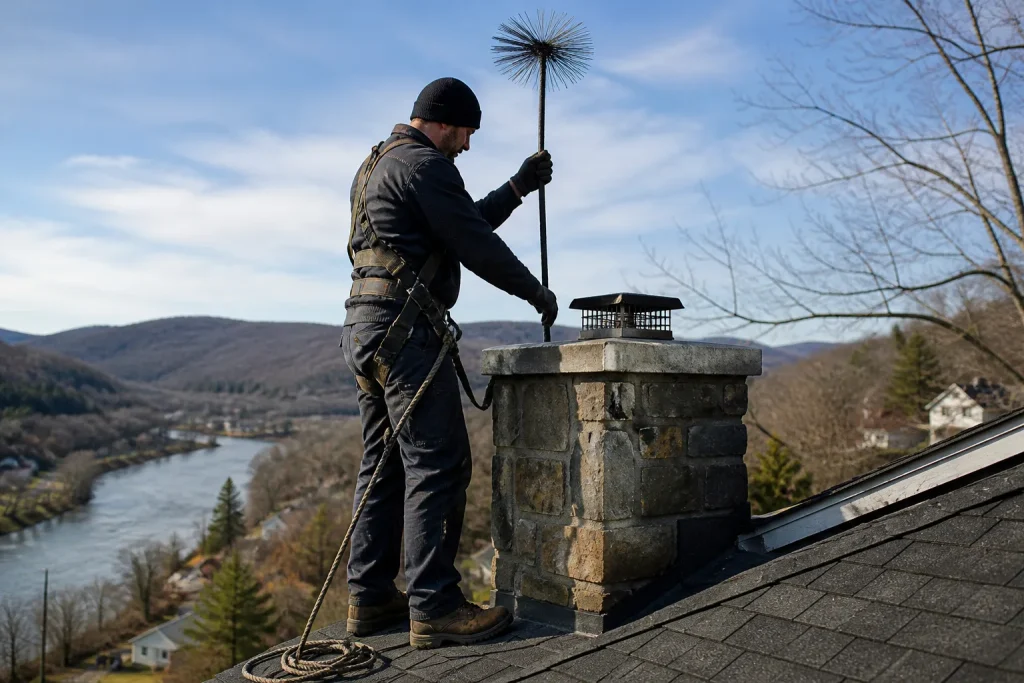
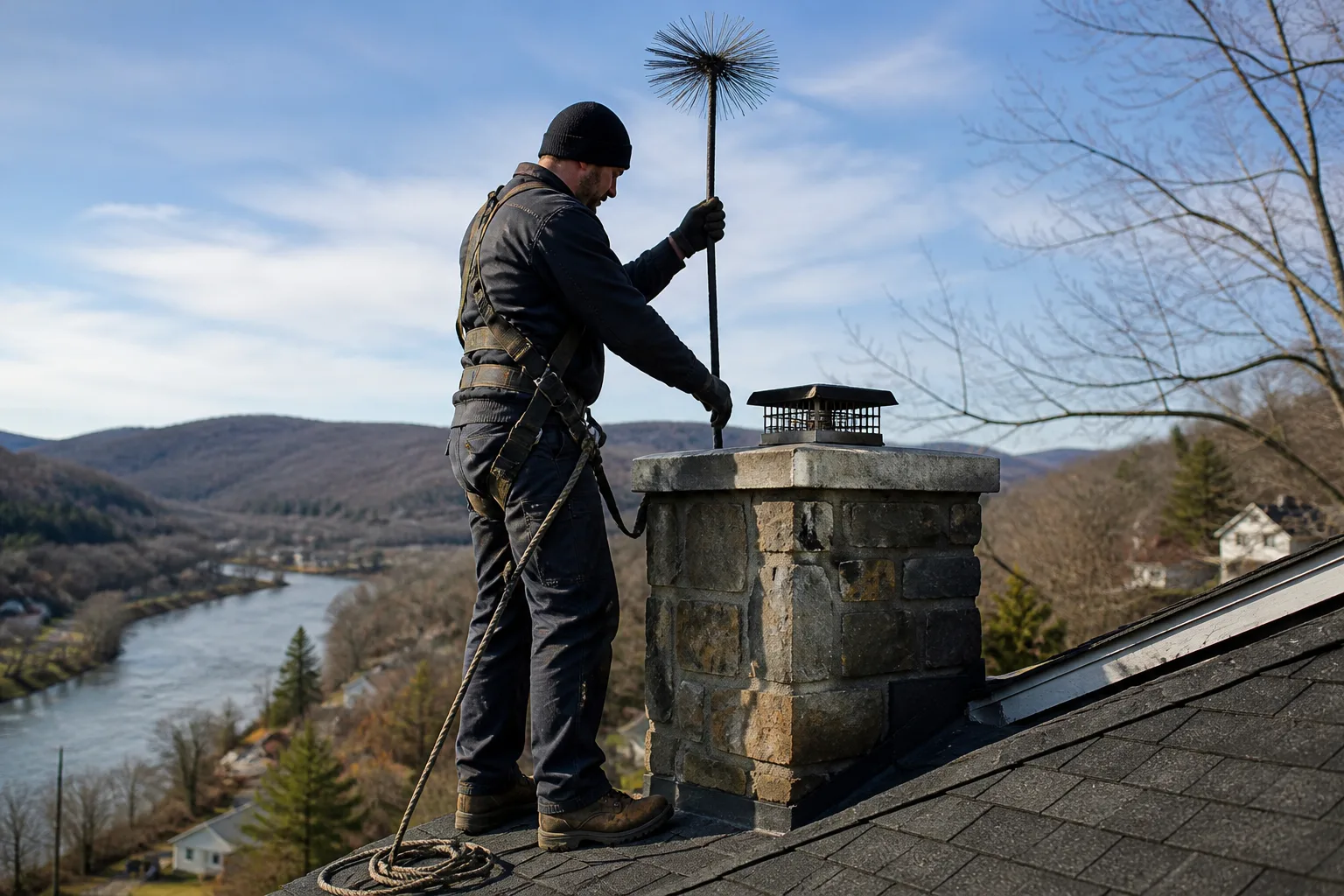
DuraFlex Chimney Sweep in Highbridge: A Homeowner’s Guide
A flexible stainless liner is only as good as its diameter calculation. An undersized DuraFlex liner creates the same draft problems as the cracked clay tile it replaced, and it can do it with a new warranty attached. That’s the mistake we see most: homeowners in Highbridge approve a liner job without ever asking how the diameter was sized or which alloy is going in the flue. This guide covers what DuraFlex is engineered to do, where it belongs, and what a correctly installed job actually looks like in Highbridge homes. If you’d rather have a specialist look at your flue than climb through this yourself, call (833) 513-8797.
What is a DuraFlex chimney liner, and what is it made of?
A DuraFlex liner is a flexible, corrugated stainless steel flue liner engineered to be pulled down an existing chimney around offsets and bends that a rigid liner can’t navigate. It’s not a generic flexible tube. The material grade is the first thing to understand, because it decides whether the liner belongs in your chimney at all.
DuraFlex liners come in two stainless grades, and the difference matters:
- 316Ti stainless – the grade specified for wood-burning appliances and most solid-fuel use. The titanium addition is what gives it resistance to the acidic condensate that wood smoke produces inside a flue.
- 304 stainless – a more general-purpose grade, commonly used where the appliance and fuel type suit it. It costs less and is not the automatic choice for a wood stove or open fireplace.
Putting a 304 liner behind a wood-burning appliance because it was cheaper is one of the ways a liner fails early. In our experience, the correct grade is not a preference; it’s determined by what you burn. A wood fireplace or wood stove in a Highbridge home should get the grade rated for solid fuel, full stop. Gas appliances have their own requirements, and that conversation is different again. Naming the alloy before the work starts is a fair question to ask, and any sweep worth hiring will answer it without hesitation.
Why liner diameter isn’t a one-size decision in Highbridge homes
Liner diameter is calculated, not guessed. The size has to match the appliance’s flue collar and the venting requirements of the appliance itself, and it also has to work with the flue’s cross-sectional area in the existing chimney. Get it too small and the appliance can’t pull enough air, so it smokes, drafts poorly, and deposits creosote faster. Get it too large and the flue gases cool before they leave the top, which encourages condensation and draft problems of a different kind.
The starting point is your firebox and the appliance connected to it. An open masonry fireplace, a wood stove insert, and a gas appliance all have different venting expectations, and the liner has to suit the one you’re actually running. Then the sweep checks the existing flue: its interior dimensions, the number of offsets, and whether the clay tiles are intact. In Highbridge, where a lot of housing has older masonry chimneys with real offsets rather than dead-straight flues, that geometry check is most of the sizing job.
What you should expect from a thorough sizing conversation:
- The appliance is identified, and its venting requirement is confirmed, not assumed.
- The existing flue is measured and its condition checked, ideally on camera.
- The proposed liner diameter is explained to you in plain terms, not just written on an estimate.
- Insulation is discussed as part of the sizing decision, because a wrapped liner behaves differently from a bare one.
If the diameter is never discussed, that’s your signal to ask why. A DuraFlex chimney liner installation in Highbridge NY is a fit problem before it’s a product purchase, and the sizing conversation is where it’s won or lost.
What a proper DuraFlex installation involves, step by step
A correct DuraFlex install follows a sequence, and knowing the sequence is how you tell a thorough job from a rushed one. Here’s what a sweep should work through, in order:
- 1
Inspection first. The flue is checked and, where needed, photographed on camera so the condition of the clay tiles and any offsets are documented before anything is ordered.
- 2
Sizing and grade selection. Diameter and alloy are confirmed against the appliance, as above.
- 3
Insulation decision. The liner may be wrapped in insulation, depending on the flue’s clearance and the appliance. This is a decision, not a default; ask which way they’re going and why.
- 4
The pull. The flexible liner is fed down from the top, guided around offsets, until it seats in the flue.
- 5
Top plate and cap. The liner is secured at the crown with a top plate, and the chimney is capped. Purpose-built components matter here; we install Gelco and Famco caps and covers because they’re made for the job, not adapted from hardware-store stock.
- 6
Bottom connector. The liner is connected to the appliance or firebox at the bottom, and the connection is checked for a proper seal.
- 7
Test and document. The appliance is fired and the draft checked, and you should receive a report or photos of the finished work.
Each step is small on its own. Skipped together, they’re how a liner ends up poorly seated or badly connected and the homeowner never knows until the first cold snap. A full sweep, cap and crown, and repair service under one specialist means the whole sequence stays with one trade instead of splitting across contractors. You can read more about our Chimney Sweep Highbridge services if you want the wider picture of what we cover.
When DuraFlex is the right call, and when it isn’t
DuraFlex isn’t the answer to every flue problem, and a specialist should tell you when it isn’t. The liner earns its place in specific conditions, and those conditions are common in Highbridge’s older masonry chimneys:
- Severe offsets or a winding flue. A rigid liner can’t make tight bends; a flexible one can, which is the core reason DuraFlex exists.
- Deteriorated clay tile that still needs a liner inside it. Where the original tiles are cracked or spalling, a flexible liner run inside the existing flue is often the practical route.
- An appliance change that needs a correctly sized, correctly graded flue. A new wood stove insert, for example, may need venting the old flue wasn’t built for.
Where it isn’t the right call: if the existing clay liner is sound and only mildly deteriorated, HeatShield flue resurfacing can restore it without a full reliner replacement, and that option deserves to be on the table. If the flue is straight and accessible, a rigid liner may be the cleaner fit. The honest answer depends on what the camera sees, not on which product is easiest to sell. That’s the standard we hold to: an inspection that tells you what’s there, and the right product for the specific problem. It’s the same logic behind our standalone chimney sweep and inspection service, where you get an objective condition report before anyone quotes work.
What a DuraFlex warranty covers, and what voids it
A DuraFlex warranty covers the liner against manufacturing defects in the material itself, for the term the manufacturer sets for that product. It does not cover a liner that failed because it was installed wrong, sized wrong, or used with the wrong fuel. Those are the voids, and they’re worth understanding before you sign off.
The common ways a liner warranty gets voided:
- Improper sizing. A liner run too small for the appliance stresses the flue and the appliance, and that’s an installation fault, not a product defect.
- Wrong fuel type. Running a liner rated for one fuel behind an appliance burning another is a classic void, and it’s avoidable at the sizing stage.
- Poor installation. A liner that isn’t properly seated, insulated where required, or connected at the bottom can fail in ways the warranty won’t cover.
This is why the paperwork matters as much as the product. Keep the manufacturer’s documentation for your liner, and ask for the installation details in writing: alloy grade, diameter, insulation, and the appliance it’s rated for. If a future owner of your Highbridge home ever asks, those records are the difference between a warranty that holds and one that doesn’t. In our experience, the homeowners who keep that file are the ones who never need to argue about it later.
When to call a pro
Some of this you can check yourself: a smoky fireplace, a draft that’s gotten worse, visible cracks in the firebox, or a strong smell when the chimney isn’t in use. Those are reasons to get the flue looked at, not reasons to start pulling a liner down yourself. A flexible stainless liner is heavy, awkward, and easy to damage on the way in, and the sizing calculation is the part that decides whether the whole job works. If your chimney needs a liner, a cap, or masonry work, let a specialist diagnose it first. When you’re ready, our chimney repair service covers the structural side, and our chimney cap & crown work handles the top of the system so the liner is protected where it exits.
Related services in Highbridge: liner installation sits alongside the rest of the chimney system we handle, from sweeping to cap and crown work, so nothing gets handed off to a different trade.
The Bottom Line
DuraFlex is a strong product line, but the liner is only as good as the sizing and grade decision behind it. When you’re evaluating a quote, ask three things: which alloy grade, what diameter, and why. A specialist who answers those clearly and shows you the flue condition on camera is doing the job right. We work with professional-grade product lines including DuraFlex, Olympia Chimney, HeatShield, Gelco, Famco, and Copperfield because the right material for the specific problem beats the easiest upsell, and our technicians have up to 8 years of experience with residential chimney systems. If you’re in Highbridge and need help, Chimney Sweep Highbridge offers free estimates. Call (833) 513-8797. We answer 24/7, with fast dispatch from 7am to 7pm, Sunday through Friday.
Frequently Asked Questions
There’s no single price, because a DuraFlex install is a per-job estimate set by the written quote after the flue is measured and sized. Diameter, alloy grade, insulation, and the condition of the existing chimney all change the scope. The written estimate sets the final price, and the estimate itself is free. Call (833) 513-8797 for an exact quote.
316Ti is the grade specified for wood-burning appliances and most solid-fuel use, thanks to its resistance to the acidic condensate wood smoke creates. 304 is a more general-purpose grade used where the appliance and fuel type suit it. The grade isn’t a preference; it’s determined by what you burn. Ask which one is going in your flue and why.
It depends on the condition of your existing flue, which is why an inspection comes first. If the clay liner is sound with only mild deterioration, HeatShield flue resurfacing can restore it without a full reliner replacement. If the flue has severe offsets or badly deteriorated tile, a flexible DuraFlex liner is often the practical route. Nothing should be recommended without camera evidence you can see for yourself.
For a wood-burning fireplace or stove in regular use, an annual sweep and inspection is the standard guidance. The sweep clears creosote buildup and the inspection confirms the liner, cap, and firebox are sound before heating season. A clean flue drafts better and the annual check catches small problems before they become liner work. Call (833) 513-8797 to book a sweep in Highbridge.
Written by the team at Chimney Sweep Highbridge.
Need Chimney Cleaning Help?
Call Chimney Sweep Highbridge - the local pro we connect you with is licensed and insured, with free written estimates in Highbridge.
(833) 513-8797